
Data storage answers
What happened, which asset, when, what report exists and what result or action was recorded?
Storing reports and certificates is useful, but it is not the same as learning from operations. Pura's direction is to use available evidence to show friction and exceptions carefully enough for people to decide what to improve.
Reliable records are the starting point; a decision is the useful endpoint.
What happened, which asset, when, what report exists and what result or action was recorded?
Where is work delayed, duplicated, missing evidence or creating avoidable administration?
These lenses are useful only where underlying records support them.
Recurring defects, avoidable follow-up or unclear handoffs may indicate a process question.
Repeated entry, document chasing and reconciliation consume capacity.
Incomplete evidence, failed results, overdue actions and unresolved ownership deserve attention.
Repetition may indicate maintenance, training, record quality or a legitimate requirement; context matters.
Discuss these only where evidence supports the conclusion.
Interpretation remains with responsible people. A briefing identifies where to look; it does not imply causation, savings or improvement without evidence.
No claim of AI, predictive maintenance, automatic savings or a fixed measurement framework is made here.
The approved synthetic views show how management visibility can surface exceptions, qualification, evidence and the next controlled action. They are bounded demonstrations, not customer performance claims.
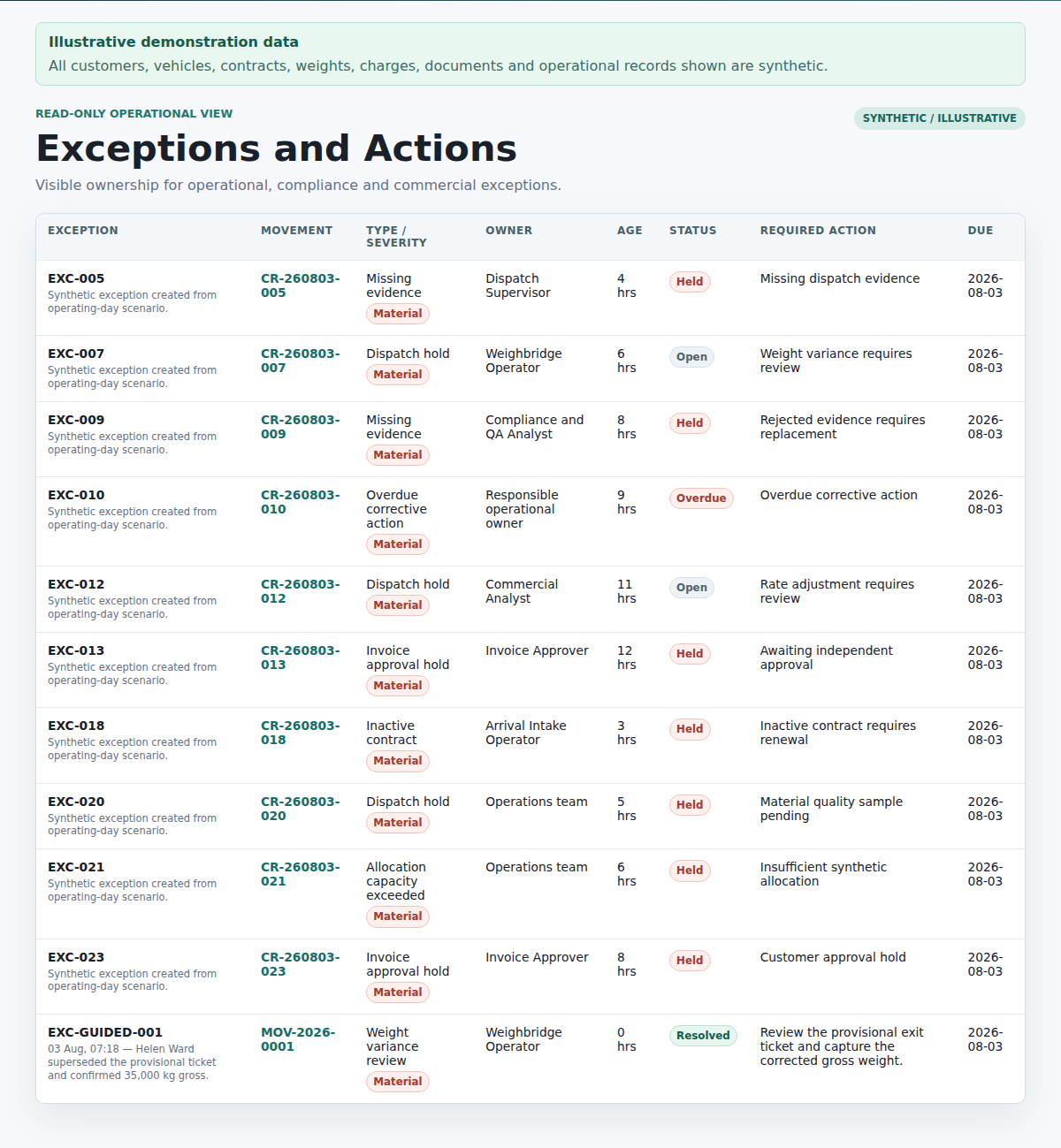
Capability: Briefing and exception management
An exception view makes severity, ownership, status, required action and due context visible for management review.
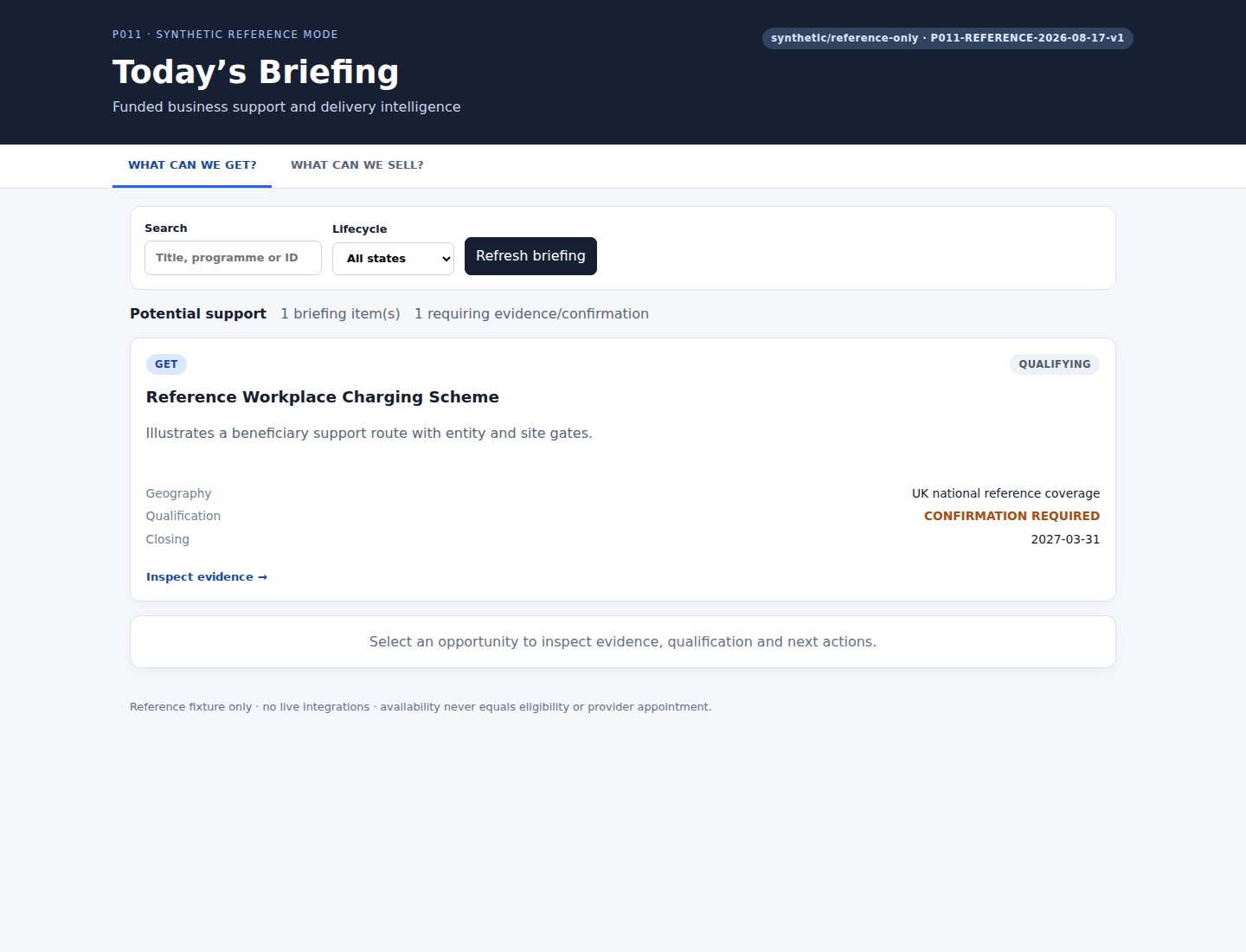
Capability: Operational intelligence
A briefing view separates known evidence, open questions and controlled next actions.
Discuss the evidence, access and decisions that currently create friction.